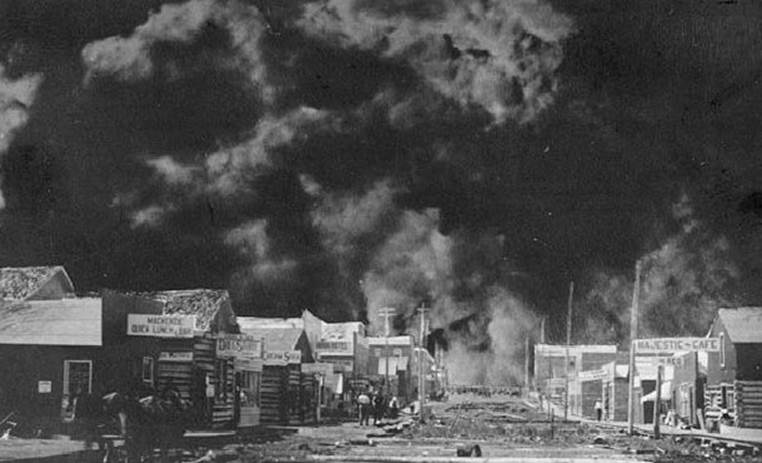
July 29, 1916 began as a hot, dry, hazy day in the northern Ontario town of Matheson. Despite the smoke in the air, residents went about their usual Saturday morning chores—the smell of burning wasn’t unusual in the tiny settler village, built along the new Temiskaming railway line. Encouraged by the government to set up homesteads, European immigrants cleared the land by burning the dense brush. With no rain for weeks, several small fires on the outskirts were already beginning to grow, but the townspeople had no reason to believe anything was out of hand.
It morphed into the largest forest fire in Canadian History: Sound familiar?;
The Great Galveston hurricane, known regionally as the Great Storm of 1900, was the deadliest natural disaster in United States history and the fifth-deadliest Atlantic hurricane overall. The hurricane left between 6,000 and 12,000 fatalities in the United States; the number most cited in official reports is 8,000. Most of these deaths occurred in and near Galveston, Texas, after storm surge inundate…The city of Galveston was effectively obliterated. Six Canadian Provinces suffered severe damages.
The deadliest natural disaster in US history: Sound familiar?;
The great European Flood of 1953 where over 2100 people lost their lives: Sound familiar?;
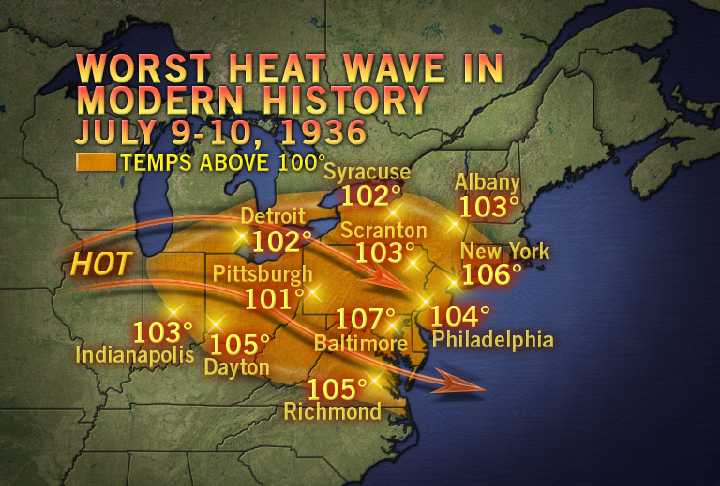
Severe drought, hottest decade on record and a dust bowl in Canada and the US that lasted over 10 years: the 1930s. Sound familiar?
It is not climate change, it is weather. Stop with the BS.
A change of pace. This is a poem I wrote back in 2005. It tells the story of the building of the Rideau Canal of eastern Ontario, between Ottawa and Kingston Ontario. It was built in response to American aggression that led to the War of 1812. Hope you enjoy it.
You can support my literary efforts by purchasing one of my books above. Kindle is cheap…about $3.99 whereas hard copy is $24.95. Click on the links above or do a search by title at Amazon.ca or Amazon.com….thanks….John aka shakeyjay.
The Rideau Canal
The curtain does fall so majestic and proud
Such a natural wonder, so gracious a shroud
As if a powerful train of glory descends
As a continuous fall at the Outaouais end
A fire alights from the south it did spread
To the north like a plague through its heart it has bled
With a mawkish like cry for freedom and joy
But freedom’s best chance was a fraudulent ploy
From a flicker of flame to a firestorm bred
Death escalates through a life cycle of dread
And taming this shrew with its penchant for blood
Was a foolish man’s bait for poor Madison’s club
Yet the fire would spread in a harrowing scene
From a spark it would roar with a devilish scream
From Niagara on east, to a Forty Mile Creek
To a nondescript farm and a Chateauguay sneak
From Queenstown to Lundy, Detroit and the Thames
The Boxer and Enterprise, surrender of Maine
Through Ohio and Plattsburg, to a Moravian town
The war it did rage for Miss Liberty’s crown
Cities would fall and the towns they would burn
First Newark then York; it was Washington’s turn
War’s firebrand eyes thrust farther to yield
And finally burn in an Orleans field
What came but a draw in this foolish man’s quest
For power and glory are such meaningless guests
Whatever the gain from the lives that were lost
For the hawkish bent men who lied at great cost
And the curtain still fell, so majestic and proud
As if sensing the chaos, so soothing its sound
Like the rapturous strains of a torrent, transcends
To emerge as a call at the Outaouais end
***
The years fell away and the anger did wane
Rush-Baggot had calmed such a petulant strain
An American age brought prosperity’s peace
As a confidant pace of change was unleashed
But the land to the north so upright and proud
Was paranoid still to the south’s freedom sound
A country that cried for security’s calm
Yet stands all alone ‘gainst a threatening psalm
But this land full of lakes and rivers and streams
Was a natural course for a military dream
For fear set in stride a magnificent quest
To build a canal that was strategically blessed
While the mighty St Laurence was a natural draw
It was fraught with real danger from its rapid rock falls
And upstream it ran from a thunderous roar
Too close to the south with its threatening core
And the Ottawa ran to St Laurence’s call
To strike from the north and a western landfall
An historical route that opened the west
Where the traders would meet at the curtain for rest
Yet two rivers did run from a common high ground
To the south and the north from Lake Rideau their sound
From the shallows and falls through the marshes and swamps
From King’s town to Wright’s town, two rivers as one
To build a canal through this wilderness screams
Of a madness and curse of the military’s dream
A task so immense, so daunting and brash
That only the British could fathom this task
But the British did find a man of the Corp
A Wellington man from the Peninsular War
A man who had held the Canadian Shield
So right for this task with indefatigable zeal
John By was a Colonel and a leader of men
Ahead of his time and a genius, well bred
An engineer’s man with a passionate streak
For simplicity’s beauty with its functional tweaks
With orders to build a navigable path
From the Outaouais south to Ontario’s wrath
To rise from a bay named the Entrance – way crept
Up flight after flight, like some nautical step
A plan was developed and contracts were signed
Engineering so simple with symmetrical lines
Pure genius at work with a heavenly hand
To guide and instruct a magnanimous man
With Drummond and Redpath, Phillips, MacKay
Canadian contractors, strong men of their day
These artists of stone were men of their word
So forthright and loyal to the Colonel’s accord
The sappers and miners and mason’s stones lay
Stonecutters and woodmen, all of the trades
For comfort, their spirit; their love of the crown
Romantic and colourful, these men of the realm
But the marvelous work that was soon to unfold
Was dependent upon the poor labourer’s code
The back wrenching work to clear out the land
And dig such a ditch with just spades in their hands
Such men from hard times, forever were cursed
To fight for survival and work through their thirst
Through backbreaking strains as their calloused hands scream
As they toiled and they toiled for this military dream
The Frenchmen held sway with their skill and savvy
So noble these men and their role as navvies
Independent of mind with a will to succeed
Just pride in their work and their songs and their deeds
But an Irishman’s fate to arrive at this place
To rescue one’s life from some wretched like fate
The scourge of the earth in the Englishman’s eye
Forgotten at home, they severed all ties
For a pestilence spread to drive them afar
From an emerald isle to this devil’s back yard
Though beauty may rest on the eye from beyond
A hellish nightmare was reality’s song
Just rags on their backs with their wives by their side
With children so weak from starvation and pride
A thousand would fall from a dengueish like hue
And die from this work’s laborious flu
Poor brothers would cry as their graves had been marked
So blind to the danger and the peril from sparks
As the powder was set with a magical link
Their lives were extinguished from the death blast’s cruel drink
Yet the lakes and the streams, swift water, rock falls
Were captured and tamed by this engineer’s call
Magnificent feats what By had achieved
In this harsh, hellish wilderness was hard to conceive
The entrance way blessed by a protestant prayer
The first stone was set by John Franklin with care
Not mindful as yet that his greatness was cast
To die in the Arctic from an arctic cold blast
The curse of Hog’s Back; an Isthmus scourge
The tranquility of Chaffey’s; Long Island was purged
At Burritt’s and Black, these rapids were tamed
And Merrickville’s beauty, a religious refrain
With names like Poonamalie, with its cedar incense
An Indian aura in a wilderness sense
Opinicon’s names and a Cranberry fog
The curse of the labourer to die in this bog
The dam at the falls known locally as Jones
Is a testament still to its magnificent stone
Block upon block in a crescent like stance
Like a rampart of genius or an engineer’s dance
The work underway, six years to progress
The locks were completed and the dams were well dressed
Through steamy hot summers, through sweat and death’s fear
Through winter’s ice jams; hell’s nightmare those years
The locks and the dams, wastewater and weirs
The cut at the entrance, eight steps to the piers
The breadth of this work remains unfathomable, sealed
As a masterpiece set in the Canadian Shield
***
The threat from the south was all but contained
For the status quo boundary was all that was gained
From the firestorm set in those years long ago
Extinguished for good as a friendship would grow
Poor tragedy’s mark on this cornerstone lay
On the heart of a man who held the Rideau at bay
Called back by a King who questioned his deed
A question of funds from some zealot to heed
An inquiry would set the tone through the years
To diminish By’s feats; he was ignored by his peers
His spirit would die from his countrymen’s chill
And not from the bog or the Isthmus ills
Yet his legacy flows for our nation to see
A wonderment still, a magnificent deed
To balance such beauty with a functional stream
Through a Canadian wilderness with just minimal means
But the jewel in the crown of this engineer’s quest
Was not the canal or his technical best
For a town had been born in the Outaouais scene
In this land full of lakes and rivers and streams
By the Barracks Hill shanty near the Sapper’s stone bend
A magnificent tower of peace would ascend
From a lower town swamp to an upper town’s view
A great city would grow with great values imbued
For this capital’s crown of achievement remains
From the peaceful green flow of the Rideau, contained
The seeds of a city and a national theme
To build a great country with the freedom to dream
And the curtain still falls, so majestic and proud
Continuing on from yesterday’s post, another excerpt from my first crack at writing a novel: I Thought I’d Died and Gone To Heaven. You can support my effort in purchasing a copy. Click on the link above and / or check out my other two attempts at being an author. Every little bit helps this poor Canadian author.
In today’s vernacular, what had just occurred was all shock
and awe for the rest of us. We were agape, our mouths wide
open, our eyes and minds in disbelief at what we had just seen,
witnessed, and processed. “Holy shit,” these words being
mouthed in silent unison. This was going to be really different
from elementary school and all that the nuns could ever muster.
This was not corporal punishment but major pain. Now I understand
the reasoning and the escalation of pain from the Sacrament
of Confirmation through our elementary days to high
school. Sister Mary Bernice’s punishment would pale in comparison
to Father Stack’s ingenuity and that of the other priests and
priests in waiting here. Nevertheless, it was considered a natural
progression of discipline in the overall Catholic scheme of things
and a transition from the rudimentary slap on the face by the
priest during the Sacrament of Confirmation, to the more classic
Catholic penance of major punishment and pain for the slightest
transgression. Self-sacrifice, flagellation, for better or for
worse. Whoa!
Thank God again for the geniuses at Hilroy. They produced a
school classic in the “Hilroy Scribbler.” These innocuous-
looking writing books were an essential part of any student’s
toolbox at St Basil’s Catholic private high school for boys. They
had an important role to play in the classrooms of St Basil
Catholic private high school for boys and the survival of its
students’ backsides. Flexible and malleable, these scribblers were
more than just a tool of record. No, they provided the perfect foil
against Father Stack’s unique method of class management and
control. Not knowing who or what might set Father Stack off
during any given class or who might find themselves at the
receiving end of his methodology of good order and discipline, it
was absolutely prudent that one protected oneself appropriately.
Consequently, prior to entering his classroom and domain, it was
necessary to stuff one or two of those scribblers down the rear of
one’s pants. Personally I preferred just one as two or more scribblers
were difficult to control. They would separate, move
around, or slide down one side or the other, especially after
sitting down on them during his discourse. Any one of us could
be caught and snared into his devilish trap so it was absolutely
essential that these binders worked but in a stealthy kind of way
as we did not want Father Stack to have any inkling that his
punishment was being met with some resistance and was therefore
ineffective. The nice thing about these Hilroy scribblers is
that they could conform to the contours of one’s backside. Even
bending over, and we did test this out, they were difficult to
detect. The tails of our blazers overlapped the upper portion of
our backsides to such an extent that, on closer inspection, the
outline of the hard spine of the binder could not be seen. It was
even better if one’s trousers were baggy in the crotch area.
This stroke of adolescent ingenuity and genius only worked
once, I’m afraid. Thinking back, it was insane for us to believe
we could outsmart these priests and their corporal ways. They
had seen it all before and no amount of creative effort on our part
could outsmart them. When they did discover our inspired inventiveness
and resourcefulness, the punishment only got worse. At
least Father Stack had a sense of humour about the whole thing:
smirking and chuckling as he was giving it out whenever we
were found out. Yet after awhile, after few months of suffering, it
became evident that Father Stack’s bite was worse than his bark.
We began to respect him, enjoy his lectures, and admire his way
of expressing himself. While we were constantly trying to
outsmart him in a juvenile sort of way by playing with his form
of corporal punishment, he never belittled us or made us feel
insignificant. Funny too, as with the feeling of being recognized
by an adult by the use of your first name, it felt really great when
Father Stack would dispatch one of us to the local corner smoke
shop during class to pick him up a carton of smokes. Keep the
change, he would often say. You had the sense that you were
trusted and respected by him. Over the course of the school year,
each and every one of us made that trek across the street to the
smoke shop to get him that carton of Camels. Good thing he was
a chain smoker.
There always existed a bit of cat and mouse play in Father
Stack’s class. We would attempt to mitigate our circumstances by
trying to undermine the tool of his trade. More than once we
addressed that bookcase by placing a multitude of objects on the
empty shelf. To no avail. He would just go over to the bookcase
and with a broad sweep of his arm scatter everything that was on
that shelf over a wide expanse of the classroom floor, then carry
on. The poor sod who was the victim of the day would then have
to clean up the mess after he received his punishment. We even
tried to hide the shelf itself. He was nonplussed about that
because, to our consternation, he would somehow produce an
exact replica of the delinquent shelf. Our most daring bit of espi-
onage was to nail the shelf into its cradle, doing so before class
and before the great inquisitor arrived. This worked to some
degree but was again thwarted. Quite ominously as it turned out.
For when Father Stack went over to grab the shelf in his
customary fashion, the shelf would not budge. But the resulting
flash of his kinetic energy caused the entire bookcase to come
crashing down, missing him by a hair’s breadth. The cacophony
of the resulting noise attracted some of the other priests in the
adjacent classrooms to come running. He just waved them off.
More importantly and more ominously for him, the action and
momentum of his arms was suddenly squelched. The causal effect
on Father Stack was equally momentous as the energy released
was oriented toward him and his entire body mass. This was unexpected
and resulted in an unflattering predicament as he found
himself off balance, falling, and landing squarely on his ass. We
were all shocked, fit to be tied, and laughed ourselves silly.
Fortunately Father Stack was not hurt except for a toss of
wounded pride. To his credit and our growing admiration for
him, he got up, brushed himself off, and continued the lecture
without missing a beat. The poor lad who was about to be the
focus of this latest cause and effect sauntered slowly and
cautiously back to his seat for he was still unsure of the consequences
to occur to him as a result of this latest student transgression.
Nothing. The next day the bookcase was back in its normal
state, the middle shelf intact, empty as always. We did have a
short respite but, in time, we were, and he was, back to our
normal selves and our normal state of affairs. We did detect that
there seemed to be a hint of mutual respect in the air in his
manner of teaching because the punishment never seemed to be
as harsh as it was at the start of the year. The whacks were bit
more subdued. Father Stack always seemed to chuckle as he was
giving it out as if to say to all of us:
“Hey, you may have won that battle, good on you, but you
will never win this war.”
Over time Father Stack met a woman, fell in love, and even
got married. He was then excommunicated.
Thought for the day:
If things need to be so diverse, why is diversity breaking up my country.
A little bit more from my days at a Catholic High School.
Read all about it in my book: “I Thought I’d Died and Gone to Heaven” Click on the link at the top of the page for more details:
Father Stack was our Religion teacher. He was a tall man,
broad shouldered, strong and tough with big calloused hands and
a roughhewn face with roughhewn features. He always seemed
to need a shave. He had dark black wavy hair, cropped very short
on the sides, which appeared to be as thick as a steel wool pad.
He had that Irish Catholic bipolar temperament of being pious on
the one hand while being a religious rogue on the other. You
knew full well that he wasn’t one to mess with. His class was the
last class of the day.
Father Stack’s classroom was as sparse as the subject itself
except for his desk, his chair, our desks, and our benches.
Nothing on the walls except for the time clock, which was situated
high up on the wall above the door. This round, black rimmed
device with its white interface, interlaced with black
numbers and black hour, minute, and second hands was standard
issue and could be found in all of the classrooms, in the hallways,
the cafeteria, gymnasium, everywhere. I am sure the same
standard time piece could also be found at St Mary’s. It was
Catholic standard time and issue and, much like the STRAP,
these clocks were probably produced in the diocese somewhere.
And its impact on us was entirely psychological. Psychological
torture for that clock was strategically placed in such a way that
you could never take your eyes off of it. There it was, front and
centre, all of the time, in your face with its hands ticking away
ever so slowly in its pragmatic, precise manner: tick, tock, tick,
tock, tick.
Will this class ever end? Father Stack sensed this, but he
didn’t have to look at the clock for it was behind him. I often
wondered what he was thinking as he looked at all of us from his
perspective. We were watching him, listening to him, and trying
without success not to shift our glance up to the clock then back
to him again, hypnotically, trance-like, and straying so far away
from his center of attention as to render the opinion that this class
was really, really boring and it was really, really difficult to stay
awake. This was indeed torture.
There was also a large, heavy wooden bookcase situated at
one end of the classroom. This bookcase was unique in that all of
its shelves were chock full of books, magazines, papers, and the
like except for one shelf, the middle of five, which was as barren
and as empty as the warmth and cuddliness of Sister Mary
Bernice’s charm. It wasn’t long before we were apprised of the
true nature of this bare-faced entity. Funny, but not so funny, was
that the clock was also inextricably linked to the bookcase.
That effin’ clock. Invariably, that clock and the monotonous
tone of Father Stack’s lectures would cause many of us to fall
asleep or nod off. That was Father Stack’s cue for action as we
soon found out.
“(Insert last name here),” he would yell. “Front and center,”
he barked again like the Holy Roller that he was. Why he picked
that individual is lost on me for there were many of us nodding
off at the same time. Our eyes becoming as heavy as lead. The
head rocking forward then back, then forward, forward, down,
down then back up again in a jerky fashion. The eyelids so
heavy, like being hypnotized, followed by that whiplash motion
of awake-fullness, followed by a deep breath of consciousness,
only to begin the torturous routine and rhythm again. Man,
oh man!
Startled, the young boy, whoever he was, not me, would limp
up to the front of the class, somewhat forlorn, standing there like
a wet noodle, downtrodden and pathetic in front of Father Stack’s
desk. His whole body seemed to shake in nervous trepidation.
Father Stack would then slowly rise up from his chair, then take
the young lad aside but away from the desk and out of reach
from the front row of students. He would then tell him, no, order
him, not to move an inch.
Walking over to the wooden bookcase, Father Stack latched
onto the empty middle shelf and with his two hands pulled the
shelf up and out and away from the bookcase itself in one fell
swooping motion. Returning to the scene of the crime with said
shelf in tow, he would then order the lad to bend over but to look
straight ahead, not down.
The shelf itself measured about one foot in width, two and a
half feet in length, and approximately one inch in thickness. And
like everything else in the nun’s or priest’s arsenal, it was proportionately
attuned to the task at hand for they had years and years
of experience and lessons learned over centuries of practice.
After all, the Catholic faith, unlike other religious orders, had the
Inquisition to fall back on. And unlike a straight-edged stick or a
shortened wooden pole, the length and breadth and thickness of
Father Stack’s shelf required a bit more dexterity and skill from
the handler when meting out punishment of this order of
magnitude.
Father Stack stood athwartship, his legs apart, beside the lad,
well balanced and straight, grabbing on to both sides of the shelf
itself. Like a golfer lining up a shot, he took a couple of short
arched practice swings, being ever so careful as to not actually
strike the target. Stopping just shy of the target itself, millimeters
I would guess, took a great deal of discipline on his part. You
could tell that he was a real pro at this sort of thing. Satisfied that
he had the right angle of attack, Father Stack raised that wooden
shelf about shoulder high then came down hard in a cossacked
whirl-winded arc, robes flaring wildly, meeting his target ass on
and at a perfect right-angled trajectory to the backside of the poor
student. Whack! Well it was more like a thud really, of wood to
the cloth-covered ass. Even the tails of the student’s blue blazer
softened and mitigated the full force and pain of the strike to
some degree. The student lunged forward with his head and his
eyes focused straight ahead rather than down at the floor, as
Father Stack instructed. There was no danger that the student
would crash headlong into something or someone unseen given
the momentum unleashed by the shelf upon his pathetic frame.
Yes, Father Stack was a real pro. His follow through was Bobby
Jones–like in its execution. He had thought of everything. We
were witnessing a real lesson here in practical physics. Unfortunately,
this class was religion.
“Sit down.” Father Stack placed the shelf back in its cradle,
clapped his hands a few times, and then carried on with the class,
as if nothing had happened.
“One whack? Is that all?” we all thought, questionably. It was
enough, for it took some time for the lad to fuss up and return to
his desk. He gait was somewhat laboured, bowlegged, and when
he reached his seat he sat down slowly, methodically, and
gingerly. Red-faced, embarrassed, but somehow just a bit cocky
as his punishment was the first of many more to come. I think he
realized that and felt some pride in being the first student to
receive this lashing and to share this corporal experience with the
rest of us after class.
Thought for the day:
Given the “so called” toxic and racist nature of being white, why do Americans call the White House the White House? Just askin that’s all.
More from my halcyon days at a Catholic High School for boys: I Thought I’d Died and Gone to Heaven.”
SEPTEMBER 1964. High School. We had arrived.
St Basil’s High School no longer exists in its current location.
I don’t know why. I haven’t been there for many, many years.
Run by the priests, it was a Catholic private high school for boys
of some note and right adjacent to it, only separated by an elongated
playing field, a football field, was St Mary’s Catholic
private high school for girls. In essence the two schools represented
a real separation of church and dates.
Tuition by today’s standards was laughable, about $150 per
year. But back in the late ’50s and early ’60s that was a lot of
money to come up with year over year. Especially if you were
part of a fine upstanding Catholic family with a large brood of
boys and girls to contend with to populate these schools, as no
legitimate Catholic family would ever think of sending their
offspring to a public—code for Protestant—high school. On top
of that there were the school uniforms, the books and other
miscellaneous religious stuff to pay for. In my own family’s case,
my mom and dad had to come up with about $175 per year per
child—times three at some point in time, totaling $450 per year.
And with Dad making less than about $70 per week before taxes,
well, do the math! I know I couldn’t. It was as painful as it was
sinful.
I didn’t really know or care. I do remember travelling on the
bus with my mom, or in the car with both parents and as we
passed St Basil her telling me, proud as punch, that one fine day I
would be going there. One fine day indeed. I could not wait. That
was how the indoctrination went. To make ends meet we all had
to work part time during the school year and full time all summer
long to come up with the necessary bucks to offset our parent’s
financial woes due to those bloodsucking school tuitions. In all
honesty, however, I didn’t mind. Funny thing that, guilt. It
instilled in me a weird sense of justification for the privilege of
being physically and emotionally abused at a Catholic private
high school for boys.
Father Stallony, baloney; Father Sullen, the melon; Father
Stack, the wrack; Father Rourque, the dork, and on and on it
went: a faculty of priests sprinkled with a few priests in waiting,
and a smattering of lay associates, or civilian teachers, as well.
One lay associate in particular, a Mr Lord, our geography
teacher, had the weirdest of legs. He suffered from a bad case of
bowlegged-ness but in reverse. Turns out that a wicked football
accident literally crippled him with two bad breaks in both of his
legs. Permanently shackled with pins and metal joints and fasteners,
he was a sorry sight to look at, especially from behind, as it
appeared he was always holding back a large dump as he walked
down those hallowed halls of higher learning at St Basil’s
Catholic private high school for boys. We could be cruel.
Initially scared and intimidated by this new environment, it
was not long before I felt comfortable in my own skin and fit
right in. Remembering Mr O’Brian’s words of wisdom and
advice, we did have a lot of laughs. So much so that I went from
A grades to B grades in the course of a year and was falling still
as the months went by during my second year at that school.
Smoking while laying down the one side of the football field
with our backs to our own school pretending to be looking at the
female students of St Mary’s while in reality we were trying to
mask our drags and the exhaled smoke from the prying binocularized
eyes of the priests and brothers equated to a couple of
whacks from Father Dork, er Rourque.
My parents were a tad worried given their financial investment.
I did look rather Catholique in my uniform and tie, and
dirty black oxfords. That was all that really mattered to the
priests and our family. Pay the rent and play the party line.
Looking back on those days and knowing what I know now,
yes, there was a great deal of discipline but it was the wrong kind
of discipline. Instilling a sense of fear through physical abuse as
punishment was not real discipline as far as I was concerned.
Except perhaps in the creative sense of belonging to a brotherhood,
a cause, as me and my mates adapted extremely well, stuck
together, and did everything possible to forestall and undermine
the priests and the brothers of their dastardly ways.